Showing posts with label books. Show all posts

Thursday, February 5, 2015

Recommended Reading: The Life-changing Magic of Tidying Up

I have been reading a lot of books lately about organizing, simplifying and minimal living. I don't read them because I feel like we really "need" them, Phil and I are both pretty neat, organized people and we never hang on to much clutter. But, I still really enjoy them (I guess that's the nerd in me). I enjoy getting new ideas. I enjoy the new perspective that living with less gives me.

I recently read The Life-Changing Magic of Tidying Up by Marie Kondo and I loved it. Most of the organizational books I have read all pretty much say the same thing. They tell you when you should get rid of your stuff (when you haven't used it for a year, when it breaks, when you no longer have a place for it, etc...), how you should get rid of your stuff (work on one room at a time, get rid of one thing each day, etc.), and then how to store the things you keep. I like to clean and I like to get rid of stuff. We get rid of stuff all the time (I take a bag to the thrift store every couple of months at least). But none of the books I have read have taken the approach that Marie Kondo does in this book.
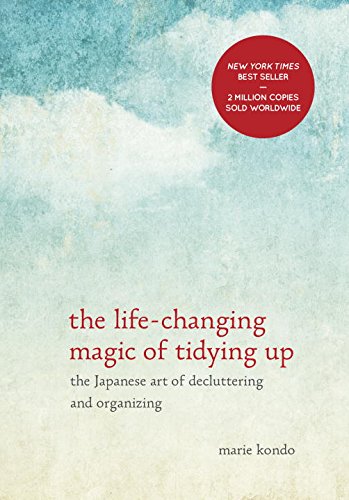

She only has one rule when it comes to when to get rid of stuff: get rid of everything that does not bring you joy. And she has one rule for how to get rid of stuff: all at once.

Obviously, some things you just need to have, whether they really bring you joy or not, like toothpaste and toilet paper and wash cloths. But really, when you think about it, most things do require some thought and choice on your part and you should choose the things that you love and make your house feel like home and then get rid of the things that you don't love and that don't bring you joy. This perspective may seem trite, but actually it really works. We hold on to so many things for all the wrong reasons: "maybe I will need it one day, it still works just fine, I spent so much money on it, it was a gift, etc." Even if all of those reasons are true, if you don't love the item, why are you keeping it?

Her second rule, that you tidy your whole house in one go also makes a lot of sense. She doesn't imply that you should actually do it all in one day (unless you actually can do that) but that you continue to work on tidying, in the order she suggests, until you are done (maybe over the course of a week, month or even several months if necessary). If you stop in the middle of the process, or do things out of order, there is a greater chance that you won't finish, or that you will rebound to your old ways and start collecting clutter again.

I think one of the things I loved best about this book was that it takes the focus off of discarding and instead emphasizes enjoying the things you have. I have often focused too much on getting rid of things to make our space neat and tidy, only to find that I have to get rid of things again before much time has passed at all. Instead, if you focus on the things you love, and why you love them, you stop buying unnecessary objects and later don't have so many things to discard. It has really made me appreciate my belongings more, and even given me a new outlook on the things that I have gotten rid of. Rather than feeling guilty about discarding something that I didn't use that much, I can still appreciate it for helping me to know better what I do and don't like, and then I can move on.

Also, my sock drawer. Kondo talks about socks in some detail and at first I thought it was ridiculous. I have always rolled and folded my socks in the same way everyone does (fold the elastic band of one sock over both socks to have a little bundle) and couldn't believe that it really mattered. But, I was curious enough to try out the way she recommends and I cannot believe how happy it makes me. not only do all of my socks now fit in a drawer half the size of the one they were in previously, but I can see all of them at once instead of having to dig around to find the pair I want. I was so excited by the outcome that I did the same things with Phil's socks, and he loves it too. This new way will definitely keep me from over-buying in the future.


I didn't take a before picture of my sock drawer, but I got one of Phil's which pretty much looked the same as mine did before I organized it: 

And this is after I added some magic, plus fit all the socks in a smaller drawer. My drawer looks pretty similar, except that I have lots of tights and peds along with my socks. 


Have you read this book? What did you think about it?

Monday, January 26, 2015

New Books and Goals as a Collector

With a father who is an avid book collector, and a mother who is happy to get any amount of books out of the house (as they are always piling up) I always come back from New Mexico with lots of reading material.

My last visit was especially fun because my grandfather recently moved out of his home and to Arizona to live with my aunt and uncle, and decided to leave his Franklin library to my dad to be divided amongst the grandchildren. Since none of my brothers were very interested in the books, I pretty much got first pick on everything, and had quite a stack by the time I was finished sorting through the piles. I couldn't bring them all home this trip because our suitcases were getting too heavy (and Franklin editions tend to weigh quite a lot), but I brought as many as I could successfully pack.


Collected Poems by T.S. Eliot
The Red Badge of Courage by Stephan Crane
Main Street by Sinclair Lewis
History by Elsa Morante

I also had fun book hunting with my dad, which we always like to do when we get together. One of his favorite Albuquerque booksellers was closing his shop just before Christmas, so we made sure to go to his store as well as a few others. Beside the books I bought shopping that day, my mom also passed on a few of her books to me that she didn't want anymore but knew I was interested in.


The Professor and The Bronte Poems by Charlotte Bronte and her sisters
Little Women by Louisa May Alcott
Lois the Witch and Other Stories by Mrs. (Elizabeth) Gaskell
A Lost Lady by Willa Cather (gift from my mom)
Presenting Miss Jane Austen by May Lamberton Becker (gift from my mom)
Early Novels and Stories by Willa Cather
Little House in the Ozarks: Rediscovered Writings by Laura Ingalls Wilder (gift from my mom)

I have been collecting books for years now, but it has only been in the past couple that my collecting goals have changed. My dad, for example, loves pretty much any book with a beautiful leather cover and an old musty smell, no matter the content. While I appreciate the beauty in those books too, I feel that I really want a personal library that is "readable".  What I mean by that is that I don't want to have only rare books that are too fragile to read comfortably. While I do have a few rare and special books, most of my books are nice editions that I would still feel comfortable letting my kids read when they are able. I want to have a collection of stories that I love, even if that means passing up a beautifully bound edition of something else because it's not a story that I enjoy. Having this as my goal has made book collecting even more enjoyable for me lately, and its always exciting to come home with new books to put on my shelves.

Thursday, January 22, 2015

Recommended Reading: Radical Homemakers

It took me a while to finish reading Radical Homemakers. I really enjoyed it, but it was a lot more dense than some of the others I have read recently. It was just packed full of information and gave me a lot to think about.


I will start off by saying that I did not agree with everything the author, Shannon Hayes, wrote, and I feel that she may have been too biased and not factual enough in some parts. This book was a bit more liberal-minded in discussing some issues than I tend to be, especially in it's vilification of big corporations, some ideas about healthcare, and some financial and retirement advice that I did not agree with. However, that being said, it did put into words a lot of what I have been thinking and feeling more and more lately.

I felt that the central idea was that people today seem to be working more and more trying to earn more and more money to pay for the more and more things that they buy, while at the same time families and communities are being damaged because relationships are not given the time and energy they need.

Radical Homemakers begins by addressing some of the issues we currently see in society such as overworking, overspending, disconnected families, and suffering communities. Many feel that if they are not busy, if they do not have a big house, a nice car, and expensive things, then they are not successful. The key, the author suggests, to correct these issues is to leave corporate America behind and focus on hearth and home.

Hayes then goes on to give the reader an in-depth history lesson on homemaking. She explains what the word homemaking really means, what it meant in feudal times, and how it has evolved since the industrial revolution. She talks about men's roles historically as co-homemakers, as well as the "housewife syndrome" that arose especially during the 1950's. She discusses the progression from families that all worked together within a household to grow their own food, make their own clothes, repair their belongings, cook and eat meals together, etc., to society now that buys everything, both spouses work 60 hours or more a week, children are over-scheduled and families rarely eat together.

"Radical" homemaking is more than just being a stay-at-home-mom (or dad), but involves incorporating certain ideas into your lifestyle such as (in the author's own words):
  • nobody cares what you drive
  • housing does not have to cost more than a single moderate income can afford
  • health can be achieved without making monthly payments to an insurance company
  • childcare is not a fixed cost
  • education can be acquired and not bought, and
  • retirement is possible, regardless of income

These "radical" ideas are then explained in greater detail with notes from interviews by the author done with 20 radical homemakers. They describe their decisions to leave behind (or never begin) a corporate career to allow more time with family. They have learned how to live with less money but have developed better relationships and greater skills. They talk about how they have learned to rely more on extended family and community to obtain the support (whether financial, material, emotional or other) they need. Many grow their own food, many only own one car, many homeschool their children.

This book gave me a lot to think about, and I enjoyed it. It made me think about some changes I could make in my own life and career as a homemaker and SAHM, such as reading more, developing new skills, planting a garden, and driving less. I would recommend this book, but with a word of caution to read it with an open mind, and with the understanding that many of the topics discussed as fact are really generalizations.  If you are looking for a lifestyle change, or want to learn more about homemaking, this is an interesting read. 

Thursday, January 15, 2015

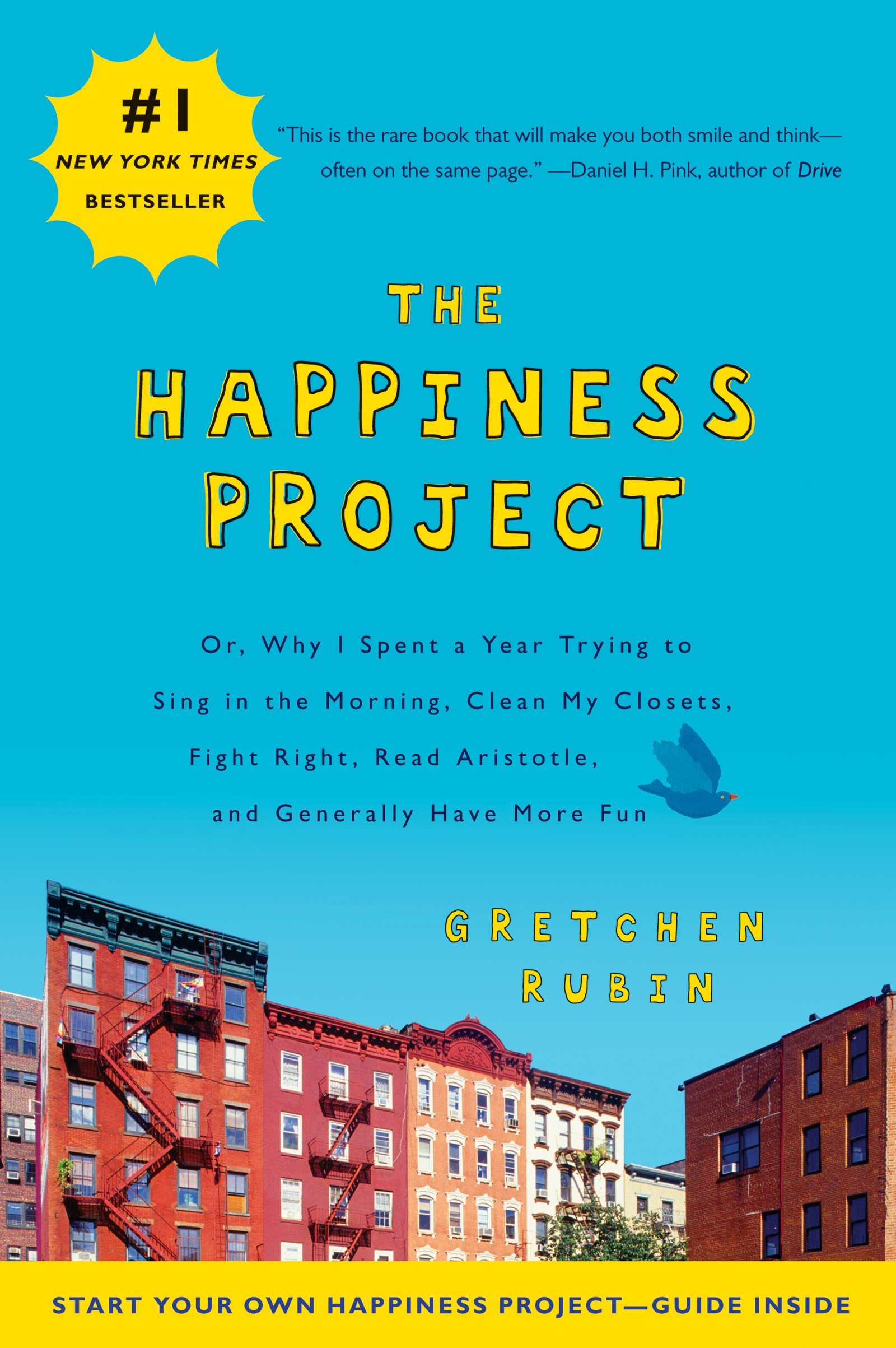
Recommended Reading: The Happiness Project

I had been hearing a lot about The Happiness Project, online, from friends, from other bloggers, and I decided I would give it a read. I didn't really know anything about it when I got it from the library, but I loved it almost immediately.


The author, Gretchen Rubin, goes through a period of reflection, and decides that her life is just too good to not be happier than she is. She and her husband are both well-employed, she has two daughters, lives in a nice home in the city she loves, and has loving and supportive extended family and friends. 

She began to research happiness in hopes to determine whether or not a person such as herself, with a pretty average life and no extreme lifestyle changes (such as a terminal illness or loss of job), could make herself happier. She decided to spend one year--focusing on different aspects of her life (marriage, work, hobbies, etc.) each month--doing things that would make her happier, and tracking her progress along the way. With that, The Happiness Project was born. 

I loved this book for a lot of reasons. First, because Rubin makes use of charts and resolutions to implement changes in her life, and it of seems exactly like something I would do too. Next, because she is so real and down to earth. She doesn't pretend to make any major break throughs that don't take time and hard work (in other words, this is not a "just follow these 4 steps to a happier life" kind of book), and is honest about her weaknesses and shortcomings. Finally, I loved this book because it really inspired me. I am a pretty naturally happy person, and I have really a pretty good life. But there are still things I could do to be even happier, and more grateful, and more well-rounded, and this book made me want to do those things.

The Happiness Project made me want to look a little deeper inside myself and see where I could improve, but not in such an "I am making this change because I should" (which is a result of feeling guilty) kind of a way, but more in an "I am making this change because I really want to and I enjoy it" kind of a way. I also read it in December, which was perfect to gear me up for a new year and encouraged me to think of resolutions to make myself happier in 2015.

I would recommend this book to anyone, whether you want to use it as a jumping off point to make changes in your life, or just as a casual read that will make you smile. Do enjoy.


Thursday, November 20, 2014

My Favorite Spot

I love our home. It is the just what we were hoping to find when we moved back to Utah, and although it is temporary (long-term temporary, but still temporary), I have still tried to make it a cozy place for us to live until the next time we move.

I have been looking for a bookshelf to put in the corner of the living room almost since the day we moved in. It was a great spot for our big, red wingback chair, and I knew that adding a small shelf would make it a perfect little reading nook. Most of my books are on shelves in our bedroom, which I love, but I really like having books out in the family area too. I think they add something special to any room, and I liked imagining myself curled up in our big chair reading stories to Luke, or just to myself.

When I finally found the perfect shelf ($15 on ksl!), it turned out even better than I hoped. It needed a little tlc, but once I gave it a makeover it was just right. I have some of my favorite book displayed on the top shelfs; a few photo albums, toys and children's books on the second shelf, and a few of Luke's board books and toys on the bottom shelf. It also has a drawer where the rest of Luke's toys can be stored away (which made both Phil and I very happy since they had been kept in a couple of bins that didn't really have a home in the living room).

Cozy isn't it?


Do you have a favorite spot in your home?

Thursday, October 30, 2014

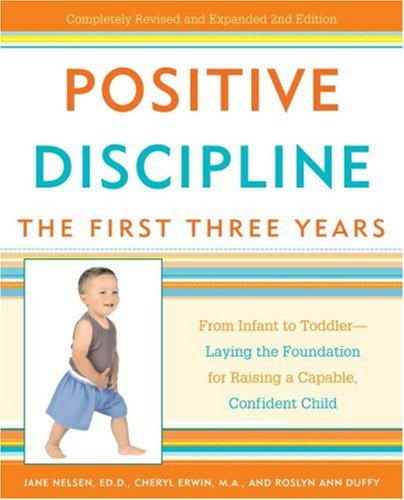
Recommended Reading: Postive Discipline: The First Three Years

I stumbled upon this book, Positive Discipline: The First Three Years, at the library a few months ago. My little one wasn't really having any discipline problems since he was only about 7 or 8 months old at the time, but I read a few pages and liked what I saw so I added it to my pile. After reading a bit more when I got home I soon couldn't put the book down and was giving my husband a summary of my reading every night before we went to bed. I don't know how many people I have already recommended this book to (probably more often unsolicited than not), but I just loved the information so much that I have wanted to share it with everyone.


This particular copy is just one of a whole series by the same author(s). You can read more about it on her website here. I plan to read more of her books as the little one grows and probably will re-read them again as we have more children, but The First Three Years was a great way to start. The book first spends several chapters discussing what discipline really is, how it is different from punishment, and how it should be used.  Then, it goes on to give the reader a much deeper understanding of behavior in infants and toddlers (in other words, why the do what they do). The authors do an excellent job explaining that what is often mistaken as misbehavior is almost always normal, age-appropriate behavior, especially when it comes to toddlers and infants. They talk about why time-out and using the word "no" don't have the effect adults expect them to, and why your child repeatedly does the same thing over and over and over, even though you have told them countless times not to.

Throughout the book we are reminded to use "kindness but firmness" and to especially utilize "redirection" when disciplining children. It also emphasizes the need children, especially toddlers, have to be in control and do things on their own, and gives lots of examples of how a parent can give their children choices that allow them to explore their own autonomy while at the same time establishing boundaries and guidelines that will teach the children to act appropriately at home and in society.

I think sometimes, parents have the idea that they should "just know" how to be a parent and they learn by trial and error, hoping for the best. Maybe they feel its a sign of weakness to ask for help or advice, but a point that this book makes is that for any other profession there is always schooling and training involved until the person can understand and complete their tasks. Why don't we do the same for parenting? There is nothing wrong with reading books, taking classes or asking for help and advice (as long as we use our own good judgment and don't try to implement everything everyone teaches us whether or not we agree with it).

I can't say enough good about this book. I would whole-heartedly recommend it to any parent, grandparent, aunt or uncle, babysitter, or even just anyone wanting to better understand children. Not only will it change your perspective when it comes to your own children, but also when you see other peoples' children, especially the tantrum-throwing ones at the grocery store (tantrums, by the way are not a sign of misbehavior, but normal, age-appropriate behavior, and this book gives great ideas on how to handle them).

I found this copy at my local library, but you can buy it online or probably at most book stores. It is a fairly quick read but still full of great information. I hope you'll check it out!

Monday, October 13, 2014

Weekly Tip: Utilize the Library


I love books. I love to hold them and smell them, and most of all read them. It's no wonder then, that I also love the library. Public libraries are a great way to not only find fun books for you and your kids, but a great way to learn. I have a bachelor's degree, but I have never felt that my education should end with a college degree, and since I can't go back to school at this time, I try to continue learning in other ways.

It's true that we can find information on just about anything online these days, but often that information is incomplete or perhaps not accurate since just about anyone can publish anything on the internet. Articles and blogs (including my own) usually only tell half the story, so while the internet is a great starting point, I think too many people have forgotten how useful real books can be.

I read a lot of fiction, but I probably use the library most for non-fiction books. I have checked out books on parenting, homemaking, psychology, biographies, and maybe a little bit of everything else. I feel that the more I can learn, the better mother and homemaker I will be. Need help disciplining your toddler? There's a book for that (actually, lots). Want to learn to organize your living room? Books on that too. Love Downton Abbey and want to learn more about the 1900s? Yay! Books for that. The only problem? Checking out too many to read at once.

Here is a list of the books I currently have checked out:

Radical Homemakers by Shannon Hayes
Simplify Your Space by Marcia Ramsland
The Anger Solution by John Lee
The Thoreau You Don't Know by Robert Sullivan
Walden by Henry David Thoreau
Related Posts Plugin for WordPress, Blogger...